railroad.wikisort.org - Station
Machiya Station (町屋駅, Machiya-eki) is a train station in Arakawa, Tokyo, Japan, operated by Keisei Electric Railway and Tokyo Metro. This article also covers Machiya-ekimae Station (町屋駅前停留場, Machiya-ekimae teiryūjō), operated by Tokyo Metropolitan Bureau of Transportation (Toei).
 | This article needs additional citations for verification. (December 2009) |
Machiya Station Machiya-ekimae Station 町屋駅 町屋駅前停留場 | |
|---|---|
| General information | |
| Location | Arakawa-ku, Tokyo Japan |
| Operated by |
|
| Line(s) |
|
| Location | |
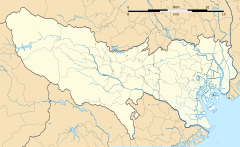  Machiya Station Location within Tokyo | |
Lines
- Keisei Electric Railway - Machiya Station
- Keisei Main Line
- Tokyo Metro - Machiya Station
- Chiyoda Line
- Tokyo Metropolitan Bureau of Transportation (Toei) - Machiya-ekimae Station
- Tokyo Sakura Tram
Keisei
KS04 Machiya Station 町屋駅 | |||||||||||
|---|---|---|---|---|---|---|---|---|---|---|---|
 Keisei station in July 2008 | |||||||||||
| General information | |||||||||||
| Location | 7-40-1 Arakawa, Arakawa-ku, Tokyo Japan | ||||||||||
| Operated by |  Keisei Electric Railway Keisei Electric Railway | ||||||||||
| Line(s) | KS Keisei Main Line | ||||||||||
| Distance | 4.3 km from Keisei Ueno | ||||||||||
| Platforms | 1 island platform | ||||||||||
| Tracks | 2 | ||||||||||
| Other information | |||||||||||
| Station code | KS04 | ||||||||||
| History | |||||||||||
| Opened | 19 December 1931 | ||||||||||
| Passengers | |||||||||||
| FY2017 | 20,655 daily[1] | ||||||||||
| Services | |||||||||||
| |||||||||||

The Keisei Main Line station consists of a single island platform serving two tracks. There is a waiting room in the center of the platform. Until October 2002, express trains stopped at the station.
Platforms
| 1 | KS Keisei Main Line | for Nippori and Keisei Ueno |
| 2 | KS Keisei Main Line | for Aoto, Keisei Funabashi, and Narita Airport |
Tokyo Metro
C17 Machiya Station 町屋駅 | |||||||||||
|---|---|---|---|---|---|---|---|---|---|---|---|
 Station platforms | |||||||||||
| General information | |||||||||||
| Location | 1-1-5 Machiya, Arakawa-ku, Tokyo Japan | ||||||||||
| Operated by |  Tokyo Metro Tokyo Metro | ||||||||||
| Line(s) | C Chiyoda Line | ||||||||||
| Distance | 5.2 km from Ayase | ||||||||||
| Platforms | 2 side platforms | ||||||||||
| Tracks | 2 | ||||||||||
| Other information | |||||||||||
| Station code | C-17 | ||||||||||
| Website | www | ||||||||||
| History | |||||||||||
| Opened | 20 December 1969 | ||||||||||
| Passengers | |||||||||||
| FY2015 | 59,061 daily | ||||||||||
| Services | |||||||||||
| |||||||||||

The Chiyoda Line station consists of two underground split platforms, with the Yoyogi-Uehara platform on the upper level and the Ayase platform on the lower level.
Platforms
| 1 | C Tokyo Metro Chiyoda Line | for Nishi-nippori, Otemachi and Yoyogi-uehara Odakyu Odawara Line for Hon-Atsugi and Isehara Odakyu Odawara Line for Hon-Atsugi and Isehara
|
| 2 | C Tokyo Metro Chiyoda Line | for Kita-senju and Ayase JL Jōban Line (Local) for Matsudo and Toride |
Toei
 Machiya-ekimae Station 町屋駅前停留場 | |||||||||||
|---|---|---|---|---|---|---|---|---|---|---|---|
 Tokyo Sakura Tram tracks and platforms | |||||||||||
| General information | |||||||||||
| Location | 7 Arakawa, Arakawa-ku, Tokyo Japan | ||||||||||
| Operated by |  Toei Toei | ||||||||||
| Line(s) |  Tokyo Sakura Tram Tokyo Sakura Tram | ||||||||||
| Distance | 1.8 km from Minowabashi | ||||||||||
| Platforms | 2 side platforms | ||||||||||
| Tracks | 2 | ||||||||||
| Other information | |||||||||||
| Station code | SA06 | ||||||||||
| Website | www | ||||||||||
| History | |||||||||||
| Opened | 1 April 1913 | ||||||||||
| Previous names | Machiya-itchome | ||||||||||
| Services | |||||||||||
| |||||||||||


The Tokyo Sakura Tram station consists of two side platforms serving two tracks. The station was previously named Machiya-itchome station.
History
| This section needs additional citations for verification. (May 2022) |
- 1 April 1913 - Ōji Electric Tramway (now Toden Arakawa line) station opens
- 19 December 1931 - Keisei Electric Tramway (now Keisei Electric Railway) station opens
- 20 December 1969 - Chiyoda subway line station opens
- 1 April 2004 - Ownership of station facilities on the Chiyoda Line were transferred to Tokyo Metro after the privatization of the Teito Rapid Transit Authority (TRTA) in 2004.[2]
Surrounding area
| This section does not cite any sources. (May 2022) |
- Arakawa Sizen Park
- Mikawashima Sewage Treatment Center
- Machiya Bunka Center
Connecting bus services
Machiya-ekimae (Machiya Station) (Toei Bus)
- No.1
- Kusa 41: for Adachi-umedachō[3]
- No.2
- Kusa 41: for Asakusa-kotobukichō[3]
Machiya Station (Keisei Bus)
- Minami-sen 01, 02: for Minami-Senju Station West Entrance[4]
- Machiya 04, 05: for Kodomo-katei-shien Center and Shim-Mikawashima Station[4]
- Machiya 05: for Ogubashi (Kumanomae Station)[4]
See also
- List of railway stations in Japan
References
- "京成電鉄 電車情報".
- "「営団地下鉄」から「東京メトロ」へ" [From "Teito Rapid Transit Authority" to "Tokyo Metro"]. Tokyo Metro Online (in Japanese). 8 July 2006. Archived from the original on 16 May 2012. Retrieved 29 May 2022.
- Tokyo Metropolitan Bureau of Transportation. バスのりば 町屋駅 (in Japanese). Japan. Retrieved 15 March 2017.
{{cite web}}: CS1 maint: url-status (link) - Keisei Bus Co., Ltd. 路線バス時刻表検索 (in Japanese). Japan. Archived from the original on 7 January 2017. Retrieved 15 March 2017.
This article incorporates information from the corresponding article in the Japanese Wikipedia.
| Districts |
|  | ||||||||
|---|---|---|---|---|---|---|---|---|---|---|
| Major stations |
| |||||||||

 | This Tokyo railroad station–related article is a stub. You can help Wikipedia by expanding it. |
На других языках
- [en] Machiya Station
[ru] Матия (станция)
Станция Матия (яп. 町屋駅 матия эки) — железнодорожная станция на линиях Кэйсэй и Тиёда, расположенная в специальном районе Аракава, Токио. Станция обозначена номером C-17 на линии Тиёда. Станция линии Тодэн-Аракава носит название Станция Матия-Экимаэ (яп. 町屋駅前停留場 матия экимаэ тэйрю:дзё:).Другой контент может иметь иную лицензию. Перед использованием материалов сайта WikiSort.org внимательно изучите правила лицензирования конкретных элементов наполнения сайта.
WikiSort.org - проект по пересортировке и дополнению контента Википедии