railroad.wikisort.org - Station
Hatchōbori Station (八丁堀駅, Hatchōbori-eki) is a railway station in Chūō, Tokyo, Japan, operated by both the Tokyo Metro and the East Japan Railway Company (JR East).
 | This article needs additional citations for verification. (May 2022) |
JE02 H12 Hatchōbori Station 八丁堀駅 | ||||||||||||||||||||||||||||||||
|---|---|---|---|---|---|---|---|---|---|---|---|---|---|---|---|---|---|---|---|---|---|---|---|---|---|---|---|---|---|---|---|---|
 Entrance to Hatchobori Station | ||||||||||||||||||||||||||||||||
| General information | ||||||||||||||||||||||||||||||||
| Location | 3-25-10 Hatchōbori, Chūō, Tokyo (東京都中央区八丁堀三丁目25-10) Japan | |||||||||||||||||||||||||||||||
| Operated by |
| |||||||||||||||||||||||||||||||
| Line(s) |
| |||||||||||||||||||||||||||||||
| Other information | ||||||||||||||||||||||||||||||||
| Station code | H12 | |||||||||||||||||||||||||||||||
| History | ||||||||||||||||||||||||||||||||
| Opened | 28 February 1963 | |||||||||||||||||||||||||||||||
| Passengers | ||||||||||||||||||||||||||||||||
| JR East, FY2010 | 28,969 daily | |||||||||||||||||||||||||||||||
| Services | ||||||||||||||||||||||||||||||||
| ||||||||||||||||||||||||||||||||


Lines
Hatchōbori Station is served by the Tokyo Metro Hibiya Line subway and the Keiyō Line from Tokyo to Soga. The station is also served by Musashino Line through-running services between Tokyo and Fuchūhommachi. It is located 9.7 km from the starting point of the Hibiya Line at Kita-Senju,[1] and 1.2 km from the western terminus of the Keiyō Line at Tokyo Station.[2]
Station layout
Hatchōbori Station consists of two individual stations run by different rail operators connected by underground passageways.
Tokyo Metro platforms
The Tokyo Metro station consists of an underground island platform serving two tracks.
| 1 | H Tokyo Metro Hibiya Line | for Ginza, Roppongi, and Naka-Meguro |
| 2 | H Tokyo Metro Hibiya Line | for Ueno and Kita-Senju TS Tobu Skytree Line for Tōbu-Dōbutsu-Kōen TN Tobu Nikko Line for Minami-Kurihashi |
JR East platforms
The JR East station also consists of an underground island platform serving two tracks. The JR line platform is deeper underground than the Hibiya Line platform.[2]
| 1 | JE Keiyō Line | for Maihama and Soga |
| JM Musashino Line through service | for Nishi-Funabashi and Fuchūhommachi | |
| 2 | JE Keiyō Line | for Tokyo |
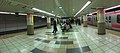 Keiyo Line platforms
History
The Tokyo Metro (formerly Eidan) station opened on 28 February 1963.[1] The JR East station opened on 10 March 1990.[2]
The station facilities of the Hibiya Line were inherited by Tokyo Metro after the privatization of the Teito Rapid Transit Authority (TRTA) in 2004.[3]
Passenger statistics
In fiscal 2010, the JR East station was used by an average of 28,969 passengers daily (boarding passengers only).[4]
Surrounding area
The station is located in the Hatchōbori neighbourhood of Chūō, Tokyo.
See also

- List of railway stations in Japan
References
- Terada, Hirokazu (July 2002). データブック日本の私鉄 [Databook: Japan's Private Railways]. Japan: Neko Publishing. p. 213. ISBN 4-87366-874-3.
- Kawashima, Ryozo (December 2009). 日本の鉄道 東海道ライン 全線・全駅・全配線 第11巻 東京南東部・千葉北西部 [Railways of Japan – Tokaido Line – Lines/Stations/Track plans – Vol 11 South-east Tokyo and North-west Chiba]. Japan: Kodansha. p. 38. ISBN 978-4-06-270021-4.
- "「営団地下鉄」から「東京メトロ」へ" [From "Teito Rapid Transit Authority" to "Tokyo Metro"]. Tokyo Metro Online (in Japanese). 8 July 2006. Archived from the original on 16 May 2012. Retrieved 29 May 2022.
- 各駅の乗車人員 (2010年度) [FY2010 Station passenger figures] (in Japanese). Japan: East Japan Railway Company. Retrieved 30 January 2012.
External links

- Tokyo Metro station information (in Japanese)
- JR East station information (in Japanese)
| Districts |
|  | ||||||
|---|---|---|---|---|---|---|---|---|
| Major stations |
| |||||||
| Landmarks |
| |||||||
| Education |
| |||||||
N - districts that start with the prefix "Nihonbashi-" | ||||||||

На других языках
- [en] Hatchōbori Station (Tokyo)
[ru] Хаттёбори (станция, Токио)
Станция Хаттёбори (яп. 八丁堀駅 хаттё:бори эки) — железнодорожная станция на линях Кэйё и Хибия расположенная в специальном районе Тюо, Токио. Станция обозначена номером H-11 на линии Хибия.Другой контент может иметь иную лицензию. Перед использованием материалов сайта WikiSort.org внимательно изучите правила лицензирования конкретных элементов наполнения сайта.
WikiSort.org - проект по пересортировке и дополнению контента Википедии